
西西里的美丽传说
冲刺四季度|创新扩能 领“鲜”一步_我的网站

A |
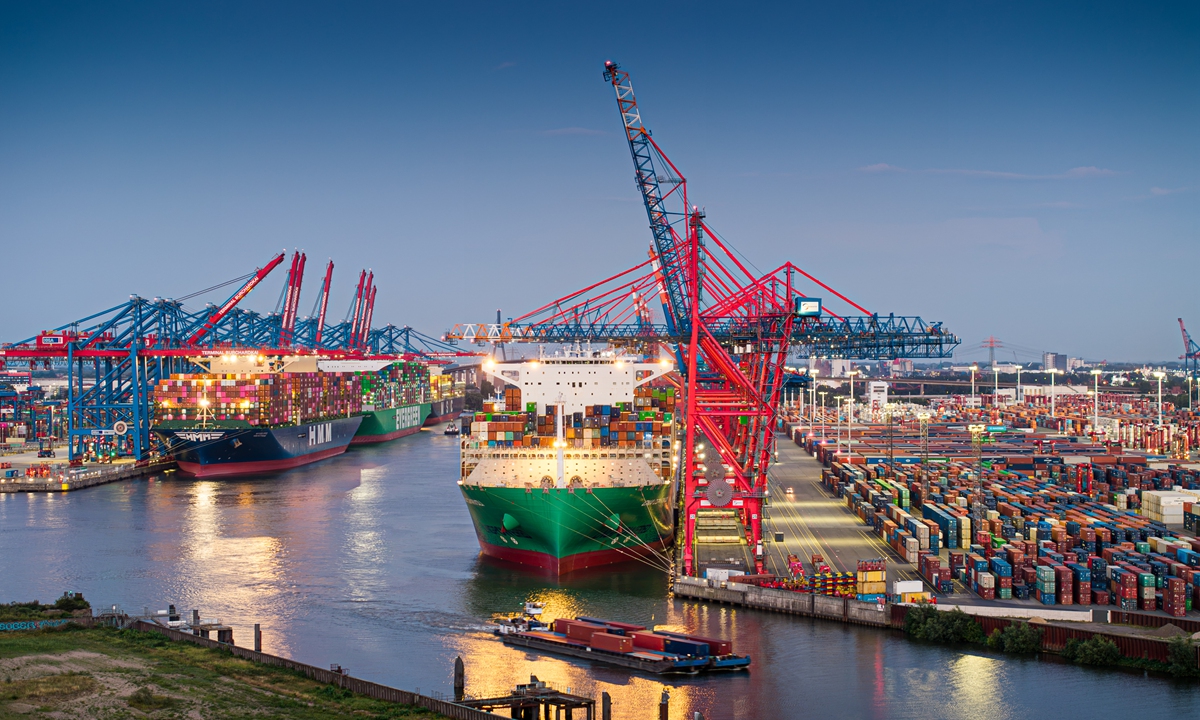
German exports to China fell year-on-year in the first half of 2026, pointing to a deeper restructuring of bilateral trade as China moves up the manufacturing value chain, Chinese analysts said. They also cautioned that the decline should not be read as diminishing China's importance to German businesses, given the deep economic ties and the continued benefits of cooperation for both sides.
Germany's first-half exports to China fell by more than 12 percent year-on-year to just under 37 billion euros ($43 billion), while imports from China rose 8.9 percent to 91.8 billion euros, according to data from Germany Trade & Invest (GTAI) cited by Reuters on Sunday. Germany's trade deficit with China widened to about 55 billion euros from 40 billion euros a year earlier, the report said.
Reuters cited Corinne Abele, GTAI's East Asia expert, as pointing to weaker domestic demand and the fact that German companies are increasingly producing inside China.
Commerzbank economist Vincent Stamer said that China's diminishing reliance on Germany showed that the country is becoming more independent of Western powers and catching up technologically, according to Reuters.
China has continued to strengthen its capabilities in sectors including new-energy vehicles, artificial intelligence and advanced manufacturing, enabling more products and technologies that previously depended on imports to be supplied domestically, Zhao Junjie, a senior research fellow at the Institute of European Studies at the Chinese Academy of Social Sciences, told the Global Times on Sunday.
"This means the structure of China-Germany trade is changing," Zhao said, noting that as Chinese industries move up the value chain, China's reliance on some German industrial products is declining, while Chinese companies are becoming more competitive in sectors where German manufacturers traditionally enjoyed strong advantages.
In a position paper released on July 28, China's Ministry of Commerce (MOFCOM) said that the rapid growth of China's modern industries is driven by innovation, with nationwide research and development (R&D) spending growing by an average of 10 percent annually during the 14th Five-Year Plan (2021-25) period.
The changing trade trend is also linked to Germany's own industrial competitiveness and policy environment, Zhao said, noting that high energy costs, demographic pressures and slower investment in some emerging technologies have weighed on the country's industrial upgrading and innovation.
At the same time, political and security considerations have increasingly shaped Germany's economic policy toward China, as Berlin has moved closer to the broader US and EU "de-risking" agenda, Zhao said.
"Such policies can be a double-edged sword, raising costs for German companies in China and disrupting bilateral economic cooperation while seeking to pressure Chinese industries."
However, it is notable that overall China-Germany trade remained substantial. Total bilateral trade exceeded 128 billion euros in the first half, about 3 billion euros more than Germany's trade with the US, according to Reuters.
China overtook the US as Germany's top trading partner in 2025 after US President Donald Trump launched sweeping protectionist tariffs that weighed on German exports to the US.
Falling German exports should not be seen as diminishing China's importance to German businesses, especially as bilateral ties are increasingly expanding beyond trade into investment, local production and R&D, analysts said.
German companies invested more than 7 billion euros in China in the first 11 months of 2025, up 55.5 percent from 4.5 billion euros in 2024 and 2023 and hitting a four-year high. German companies are bulking up their China business and adopting "China for China" production strategies partly to reduce exposure to possible tariffs and export restrictions, according to Reuters.
Major German companies are also deepening their presence in China. BASF's Verbund site in Zhanjiang, South China's Guangdong Province went fully operational in March with an investment of 8.7 billion euros, the largest single investment project wholly owned by a German enterprise in China, the Xinhua News Agency reported.
"China and Germany have developed deeply intertwined economic interests over many years," Zhao said. Rather than treating stronger Chinese industries as a reason to reduce cooperation, Germany should adapt to a relationship in which competition increasingly coexists with investment, innovation and industrial collaboration, he noted.
Recent high-level exchanges have also underscored the importance both sides attach to economic ties. During a meeting with German Economy Minister Katherina Reiche in May, Chinese Vice Premier He Lifeng said that China and Germany are important economic and trade partners with a solid foundation, enormous potential and strong complementarity, calling on both sides to consolidate cooperation in traditional sectors and tap opportunities in emerging fields, according to the Xinhua News Agency.
Reiche said that the German business community remained confident about China's economic prospects and innovation capabilities and would continue to deepen cooperation, Xinhua reported.
The two sides have also moved to strengthen institutional mechanisms. China and Germany agreed to restart the China-Germany Joint Economic Committee and establish two new working groups on trade and investment and industrial cooperation, according to the MOFCOM.
。 打好收官战,冲刺四季度。当前,辽宁艾莱食品有限公司开足马力点燃“动力引擎”,忙生产、赶订单,一个个热火朝天的生产景象不断刷新“进度条”,全力推动高质量发展提质增效,确保完成全年目标任务。

B | 11月13日,记者在辽宁艾莱食品有限公司生产车间看到,工作人员正在生产线前有条不紊地赶制订单。 据了解,辽宁艾莱食品有限公司成立于2019年10月,是一家集高端乳品生产、经营、科研、培训及奶酪文化为一体的现代化高新科技企业。多年来,公司秉承着“创新高效、诚信协作、踏实严谨、勇于担当”的发展理念,深耕乳制品行业,现已经成为全国奶酪制品行业中的新兴企业,产品深受市场欢迎。 今年,辽宁艾莱食品有限公司新增客户10余家,签订了合作协议,为其提供奶酪产品及原料。公司引进即食产品生产线,奶酪种类由原来的10多种,扩大到了20多种。前三个季度,公司产值比去年同期相比增加了60%。 进入到四季度,公司上下众志成城,为了实现年度目标而全力以赴。工人们加班加点,不辞辛劳,严谨细致地操作每一台设备,严格把控每一道工序。

C | 从原材料的筛选,到加工制作的每一个环节,再到包装出厂,每一块奶酪都凝聚着工人们的心血和汗水。质检部门更是严阵以待,以高度的责任心和专业精神,一丝不苟地进行各项检测工作,为产品质量保驾护航。

D | 辽宁艾莱食品有限公司总经理丁代永说:“我们公司研发团队不断努力创新,在实验室里反复试验,不断改进,力求推出更多既美味又营养,符合市场潮流和消费者口味的新品,为企业带来新的增长点。

E | ” 公司销售部门作为先锋队,积极拓展市场渠道,与各大经销商紧密合作,共同谋划营销策略。通过参加各类展会、举办促销活动等方式,加大宣传推广力度,及时反馈市场信息,为企业决策提供了有力依据。 丁代永还说:我们将铆足干劲,以饱满的热情和坚定的决心,向着四季度的目标任务奋勇前进,为抚顺的发展贡献力量。” 责任编辑:刘春阳。
Current article:http://l5okb5n.tichannangenzhuchuapin.cfd/list_dvn/kxgv.html
Published on:08:04:30
我的网站相关阅读
- “台球皇帝”亨得利转战直播间 虎牙重塑斯诺克打开方式
- 曝PS6成本就960美元!首发定价超千元板上钉钉?
- 冲刺四季度|创新扩能 领“鲜”一步
- 【好评中国】河声丨“奔县游”火热出圈,小城不大,风景刚好
- “三好生”张帅“熬鸡汤”
- "Film World Is All False" - When Dharmendra Spoke About Why Guddi Was Made
- Black Myth: Zhong Kui unveils 15-minute gameplay as series moves beyond Wukong
- 日本列车撞人致2人死亡,警方:现场附近发现一本中国护照,疑似中国游客
- WAIC观察丨工业AI突破“感知”瓶颈 端侧亟待标准统一
我的网站最新文章
- 冉莹颖邹市明车内争吵登上热搜 女方委屈落泪
- AI解码人类基因关键DNA“起始子”序列特征
- 台军试射火箭偏轨自毁,坠落山头冒白烟,附近村民直呼“吓死人”
- 奋进强国路 阔步新征程丨清原:为助农增收注入新活力
- 「1年3ヶ月で首を切られ無職に」立憲・杉尾参院議員 高市政権の衆院解散への苦言が“有権者批判”と批判続出…区議会議員も「他責思考極まれり」
- 上海高院通报《崩坏:星穹铁道》游戏新版本遭未成年人“解包泄密”,米哈游获赔 100 万元
- 上半年,河北福彩即开票幸运盘点
- 我国期货市场首次实现跨境交割,我国期货市场首次实现跨境交割
- 中超综合消息:浙江胜大连人 泰山“双杀”亚泰
- 国家统计局:2024年GDP同比增长5.0%
- 股价直逼500元!“北证一哥”剑指历史新高 北交所百元股扩容 这些个股交投活跃
- 台风“沙德尔”步步逼近 预计明天夜里到后天登陆 杭州将迎来一次风雨过程
- 起亚全新赛图斯正式开启预售 限时预售价8.09万元起
我的网站随机推荐
- 中国第一个3D打印生物标本:世界上最后一只白海豚的完美复制
- 汝河二幼元旦放假通知
- लुधियाना में दर्दनाक हादसा, छत गिरने से पूर्व वॉलीबॉल खिलाड़ी की मौत
- 优化车机及导航功能 魏牌摩卡/拿铁/玛奇朵系列车型迎来OTA升级
- 1—7月云南省重大项目入库纳统率达79.9%
- Foreign financial institutions bullish on China's hard-tech growth momentum
- 蓝思科技:公司在AI眼镜领域已实现核心卡位
- 绿茵争锋燃岚岛 平潭体彩公益伴赛事
- 闪小融借款时悄悄扣会员服务费我要回329元被扣的钱
- 京东双十一什么时候开始 从10月9日开始持续到11月14日结束 2025京东双十一最强玩法清单
- Cybercab正式定档!自动驾驶赛道迎来新催化 这7股业绩倍增可期(名单)
- Colombia earthquake kills at least 111
- 中收下滑54.8%,5200亿温州银行拟申请设立理财子、资金运营中心、消金“三大牌照”意味着什么?